Weekly Economic Report from the Fiscal Policy Office as of September 10, 2021
The Fiscal Policy Office (FPO) reports the weekly economic situation as of September 10, 2021, as follows:
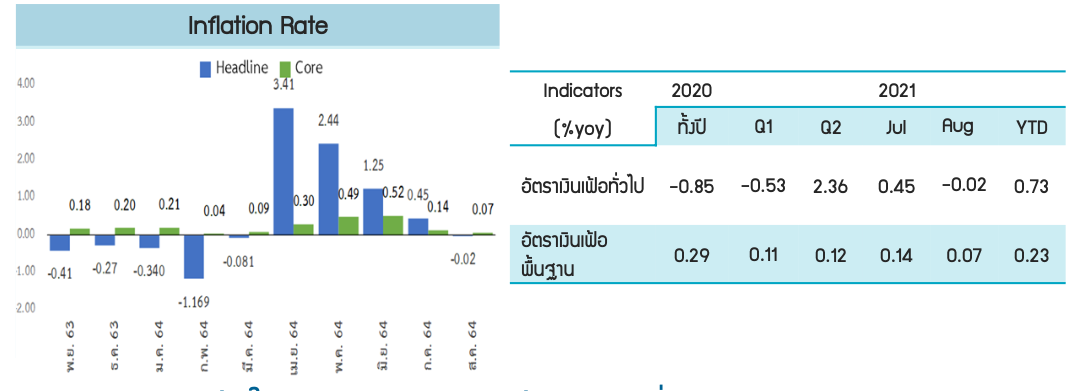
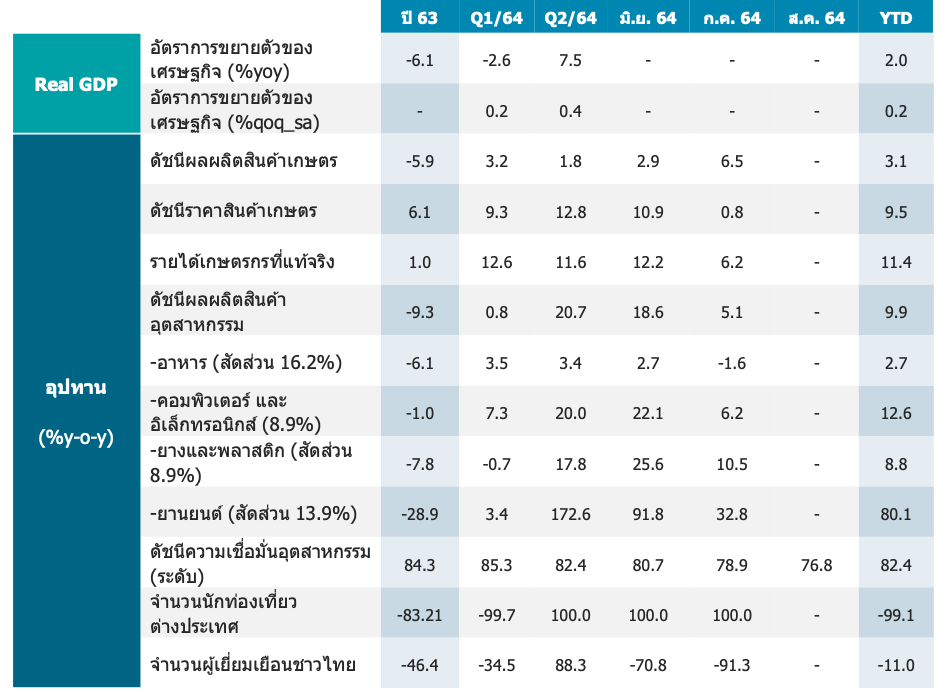
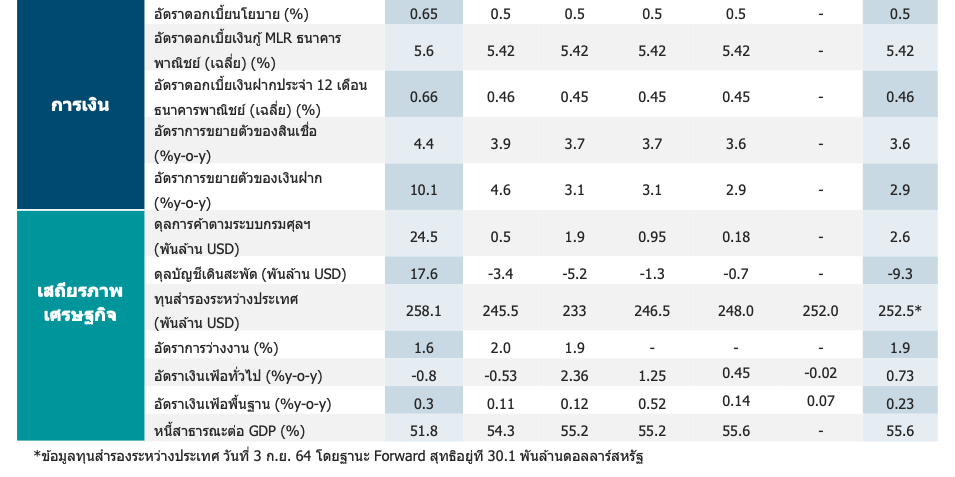
1. The general inflation rate for August 2021 decreased by -0.02% year-on-year, while the core inflation rate grew by 0.07% year-on-year.
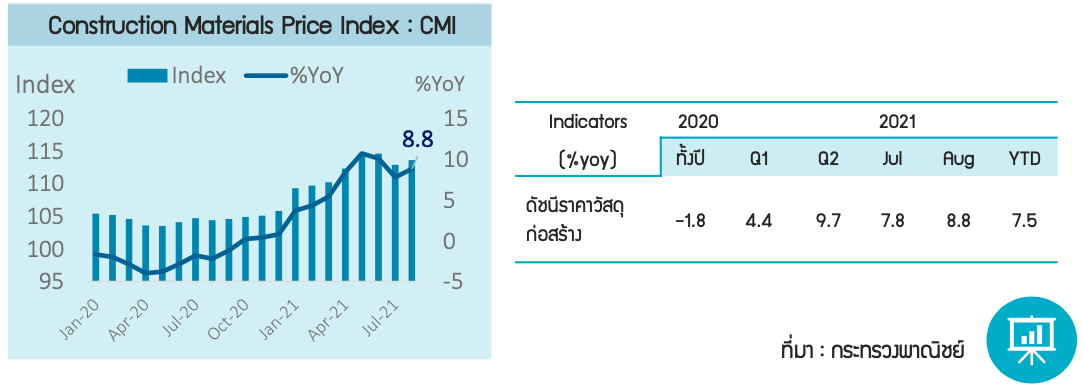
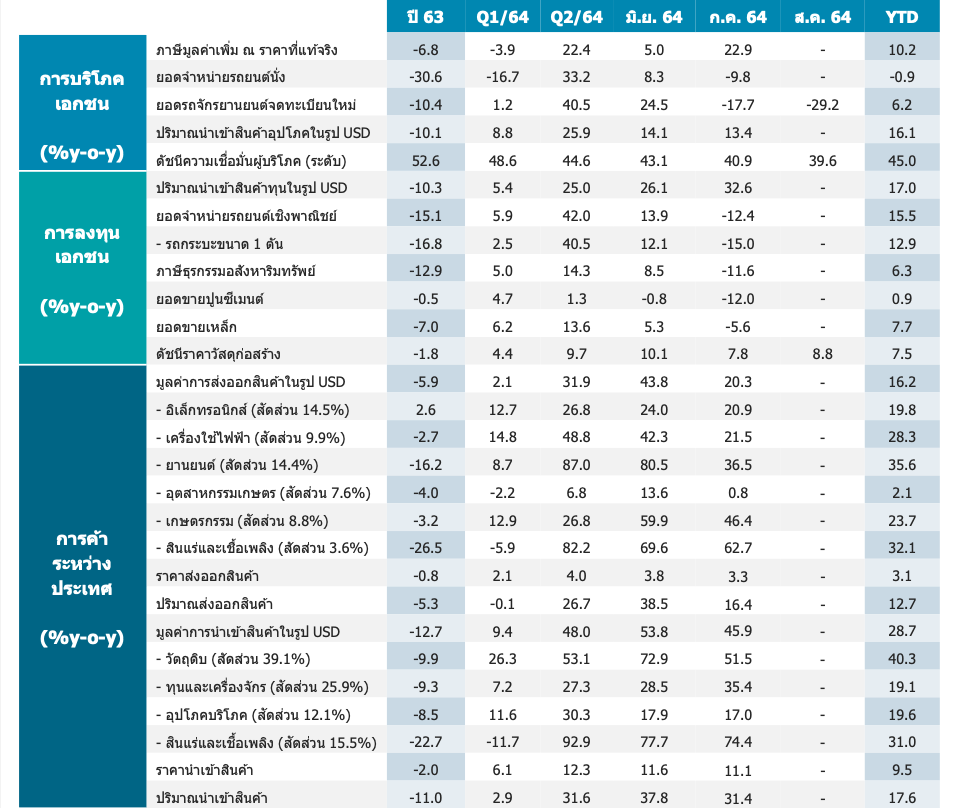
2. The construction material price index in August 2021 increased by 8.8% compared to the same period last year.
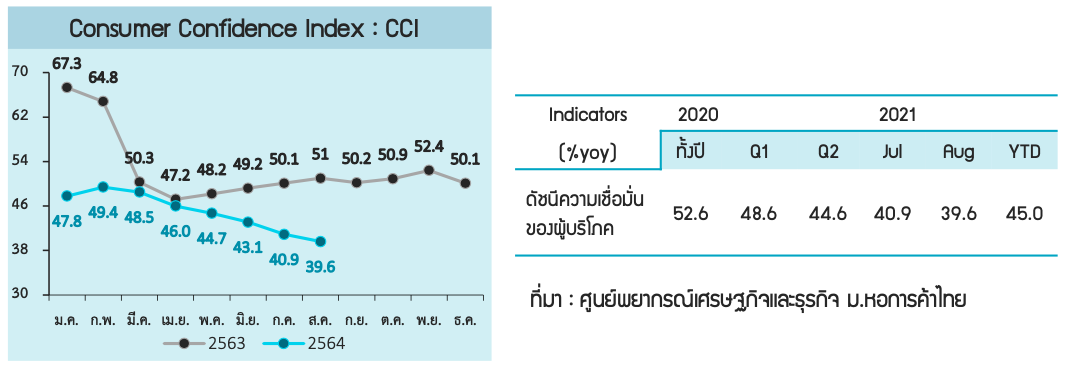
3. The consumer confidence index in August 2021 dropped to 39.6 from 40.9 in the previous month.
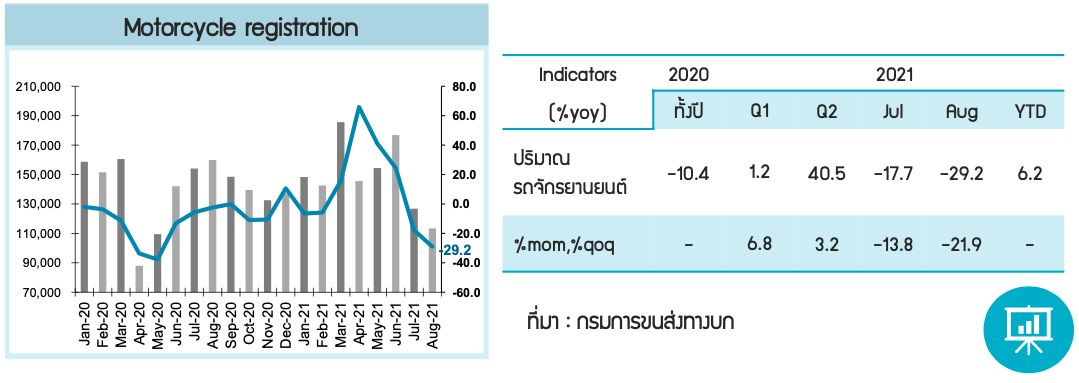
4. The number of newly registered motorcycles in August 2021 contracted by -29.2% compared to the same period last year.
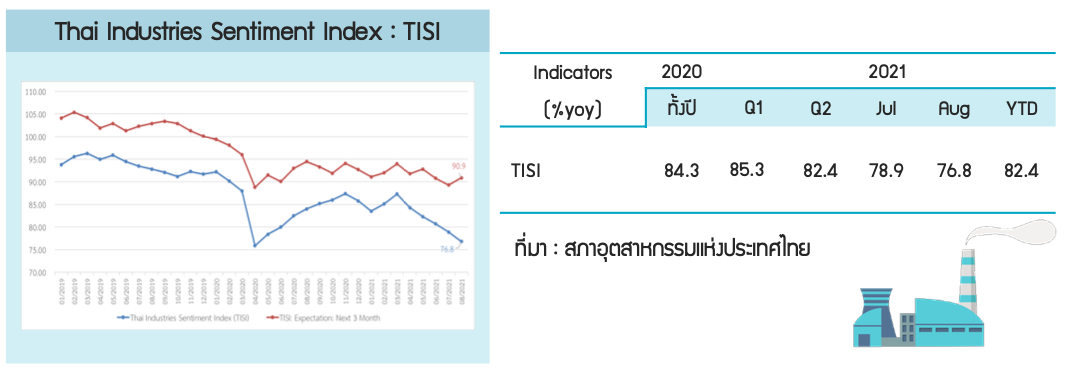
5. The industrial confidence index (TISI) in August 2021 decreased to 76.8 from 78.9 in the previous month.
6. The current account balance for July 2021 recorded a deficit of -680.0 million USD.
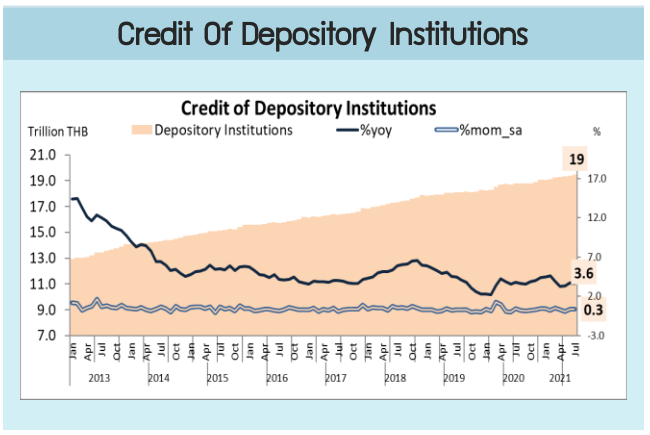
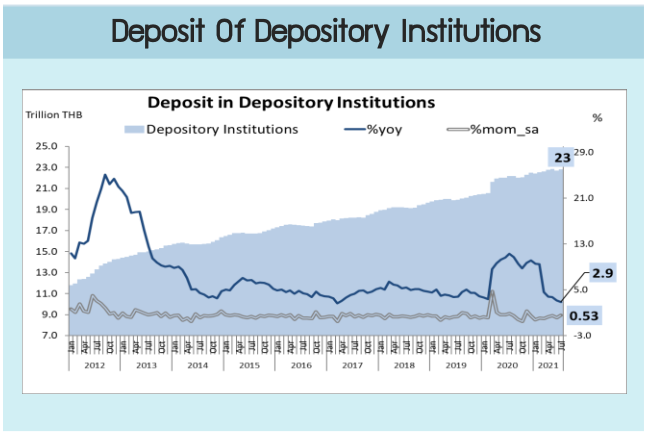
7. Loans in financial institutions in July 2021 grew by 3.6% year-on-year, while deposits in financial institutions increased by 2.9% year-on-year.
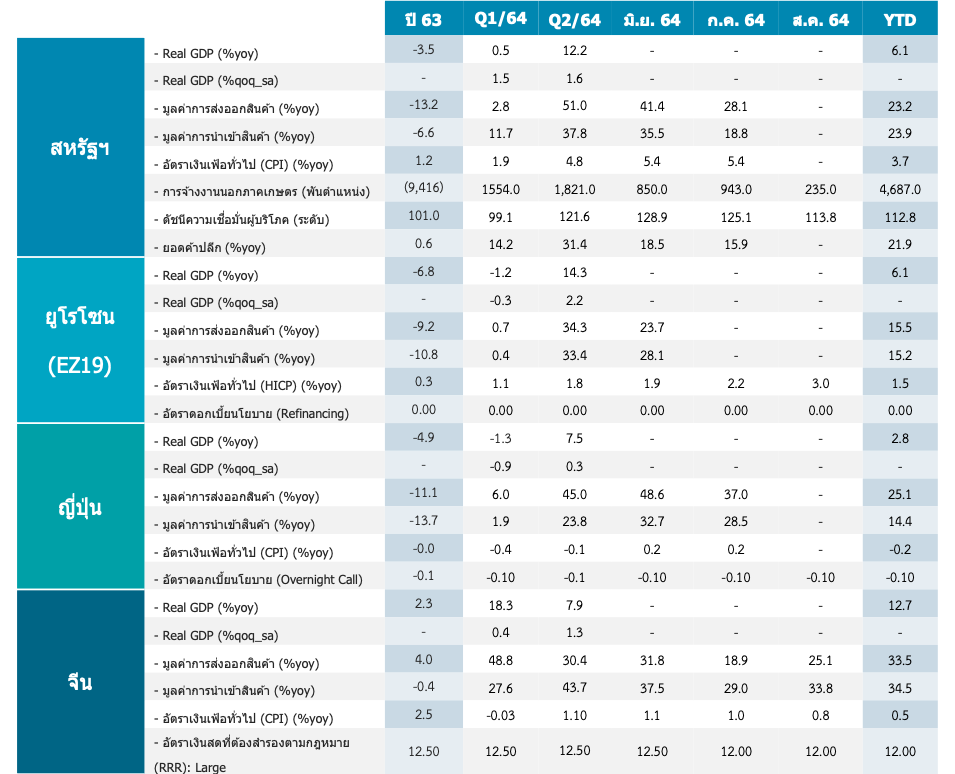
8. Japan's GDP for Q2 2021 grew by 7.5% year-on-year.
9. The Eurozone's GDP for Q2 2021 (third estimate) grew by 14.3% year-on-year.
10. The UK's GDP for Q2 2021 grew by 22.2% year-on-year.
Indicators of the Thai Economy
The general inflation rate for August 2021 decreased by -0.02% year-on-year, marking a contraction for the first time in five months, primarily due to government measures to alleviate living costs, particularly reductions in tuition fees, electricity bills, and water charges. Additionally, prices for certain fresh food items, especially rice, meat, fresh vegetables, and fruits, have significantly decreased compared to the same period last year.
Moreover, energy prices continued to rise but at a slower rate than the previous month, while prices for some items, particularly chicken eggs and cooking ingredients, increased, and some remained stable. This situation contributed to the reduction in inflation this month. Excluding fresh food and energy, the core inflation rate grew by 0.07%.
The construction material price index in August 2021 increased by 8.8% compared to the same period last year
This marks the 11th consecutive month of growth, driven by the steel and steel product category, which grew by 39.3% due to high global steel prices. Meanwhile, prices for other construction materials mostly followed the rising costs of raw materials, with only the cement category continuing to contract by -1.7%. The ongoing COVID-19 pandemic, with high daily infection and death rates, along with concerns about clusters of infections in construction camps, will continue to impact construction activities and slow the growth of the construction material price index in the future.
Indicators of the Thai Economy
The consumer confidence index in August 2021 decreased to 39.6 from 40.9 in the previous month, marking the lowest level in 22 years and 11 months since the survey began in October 1998.
This decline is due to concerns over the fourth wave of COVID-19 in Thailand and the government's designation of 29 provinces as maximum control areas, implementing lockdown measures and curfews from 9 PM to 4 AM to control the virus spread, impacting people's daily lives, business operations, and the country's economic situation. Additionally, concerns about political instability and the slow vaccination rollout have led consumers to feel that the Thai economy is slowing down and lacks momentum for future recovery. However, consumers are beginning to feel hopeful that the Thai economy will recover in the future following the announcement of eased lockdown measures starting September 1, 2021.
The number of newly registered motorcycles in August 2021 contracted by -29.2% compared to the same period last year and, after adjusting for seasonal effects, contracted by -21.9% compared to the previous month. This marks the second consecutive month of contraction, influenced by consumer concerns regarding the ongoing COVID-19 outbreak, which has seen a continuous rise in daily infections, leading to strict controls in many areas, affecting income and consumer confidence. Additionally, stricter lending policies from financial institutions due to rising household and agricultural debt have also played a role.
Indicators of the Thai Economy
The industrial confidence index (TISI) in August 2021 decreased to 76.8 from 78.9 in the previous month.
This decline is due to the worsening COVID-19 situation and the government's escalation of lockdown measures, which have slowed down economic activities in the country. The outbreak in several industrial factories has led to reduced production capacity and delayed deliveries, especially in export-oriented industries. Additionally, SMEs are facing liquidity issues. However, the depreciation of the Thai baht remains a supportive factor for the export sector.
Financial Sector Indicators
The current account balance for July 2021 recorded a deficit of -680.0 million USD, an improvement from the previous month's deficit of -1,305.5 million USD.
The services, income, and transfers balance recorded a deficit of -4,041.1 million USD, which is an improvement from the previous month, while the trade balance (BOP system) surplus decreased to 3,361.1 million USD from the previous month, resulting in a total current account deficit of -9,325.6 million USD for 2021.
Loans in financial institutions in July 2021 totaled 19.5 trillion THB, representing a growth of 3.6% year-on-year, or an acceleration of 0.3% from the previous month (after seasonal adjustment). When categorized, business loans grew by 1.9%, while consumer loans grew by 4.6% year-on-year.
Source: Bank of Thailand
Deposits in financial institutions in July 2021 totaled 22.8 trillion THB, representing a growth of 2.9% year-on-year, or a seasonally adjusted growth of 0.5% from the previous month. Deposits from commercial banks grew by 3.6%, while deposits from specialized financial institutions grew at a slower rate of 1.2% year-on-year.
Source: Bank of Thailand
International Economic Indicators
United States
The number of initial jobless claims for the week (August 29 - September 4, 2021) decreased to 310,000, down from 345,000 the previous week, while the market had anticipated 335,000. This is the lowest level since late March 2020, reflecting a recovery in the U.S. labor market, supported by businesses reopening and the new school year starting in September 2021. However, the U.S. labor market still faces risks from the COVID-19 outbreak and labor shortages. Additionally, the number of jobless claims remains higher than the pre-pandemic average of 200,000 per week. The situation will need to be monitored after September 6, 2021, when the unemployment benefits program is set to end.
China
The inflation rate in August 2021 grew by 0.8% year-on-year, slowing down from 1.0% in the previous month, marking the lowest level in five months, primarily due to a significant drop in pork prices. Additionally, the implementation of stricter measures to control the Delta variant of COVID-19 and travel restrictions has severely impacted demand in the service sector.
The value of exports in August 2021 grew by 25.6% year-on-year, accelerating from 19.3% in the previous month, supported by a recovery in global demand, particularly from the U.S. and Europe, which helped offset the economic impact of the new outbreak in China and shipping issues.
The value of imports in August 2021 grew by 33.1% year-on-year, accelerating from 28.1% in the previous month, reflecting a recovery in domestic demand and the success of measures to control the outbreak.
The trade balance in August 2021 recorded a surplus of 58.34 billion USD, up from a surplus of 56.59 billion USD in the previous month.
Japan
GDP for Q2 2021 grew by 7.5% year-on-year, or 0.3% compared to the previous quarter (after seasonal adjustment).
Eurozone
The GDP for Q2 2021 (third estimate) grew by 14.3% year-on-year, an increase from -1.2% in the previous quarter, due to base effects and recovering demand following the reopening of the Eurozone economy. The European Central Bank decided to maintain the policy interest rate at 0.0% during its September 2021 meeting. However, the ECB signaled that it would reduce the volume of its emergency bond purchase program (PEPP) due to the ongoing signs of recovery in the Eurozone economy.
Australia
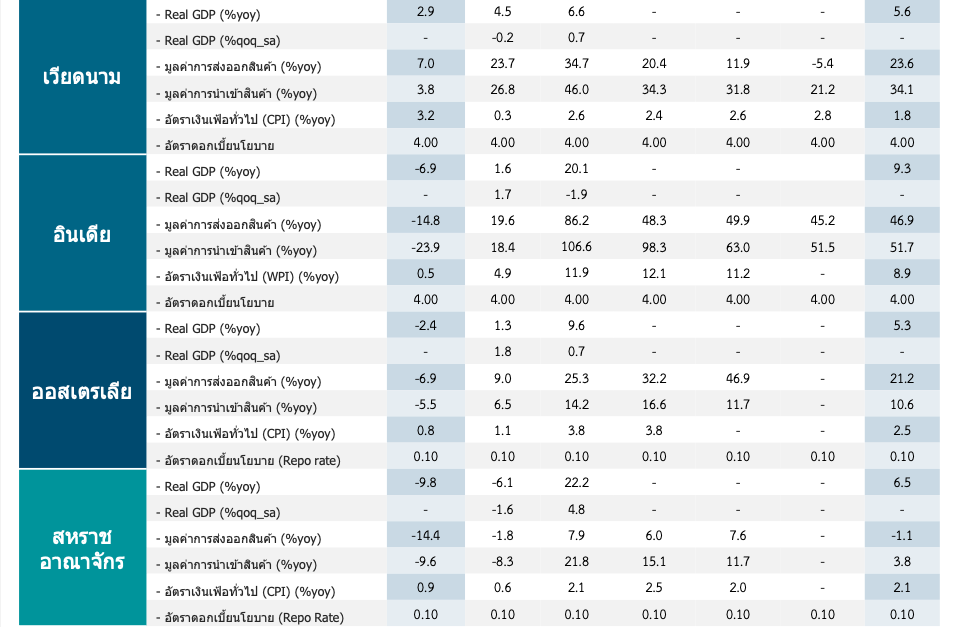
The value of exports in July 2021 increased by 46.9% year-on-year, up from 32.2% in the previous month.
The value of imports in July 2021 increased at a slower rate of 11.7% year-on-year, down from 16.6% in the previous month.
The trade balance in July 2021 recorded a surplus of 12.11 billion AUD, up from 11.1 billion AUD in the previous month.
Malaysia
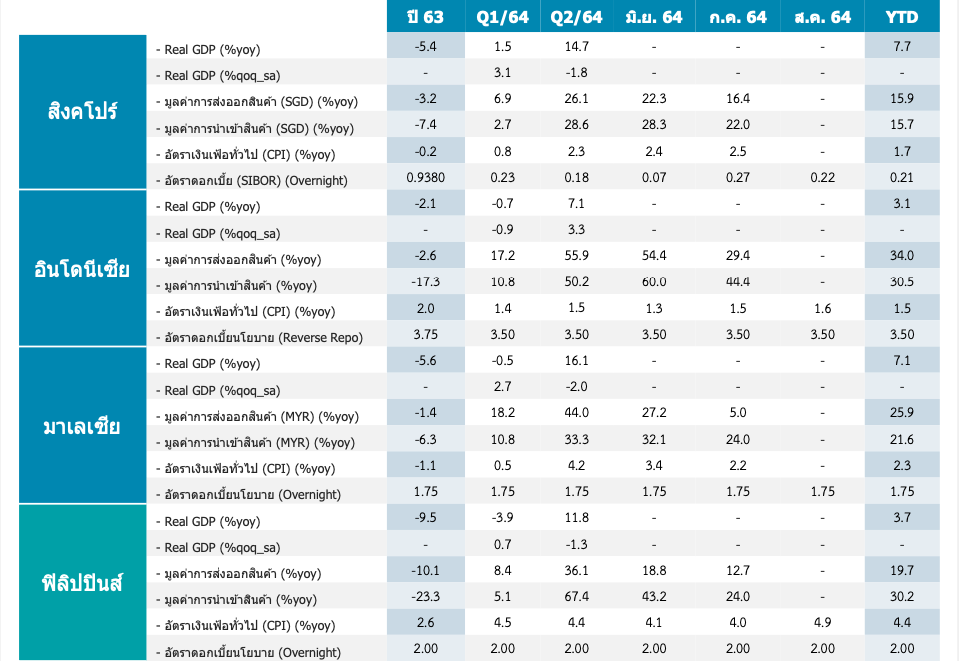
The Bank Negara Malaysia announced to maintain the policy interest rate at 1.75% per annum.
The retail sales in July 2021 contracted by -8.1% year-on-year, worsening from -2.9% in the previous month, primarily due to fuel sales.
The unemployment rate in July 2021 remained at 4.8% of the total labor force, unchanged from the previous month. The industrial production in July 2021 contracted by -5.2% year-on-year, down from 1.4% in the previous month due to a significant decrease in overall industrial output.
The consumer confidence index in August 2021 stood at 77.3 points, down from 80.2 points in the previous month due to stricter pandemic control measures.
Indonesia
Retail sales in July 2021 contracted by -2.9% year-on-year, down from 2.5% in the previous month, primarily due to clothing sales.
The value of exports in July 2021 grew by 12.7% year-on-year, down from 18.8% in the previous month.
Philippines
The value of imports in July 2021 grew by 24.0% year-on-year, down from 43.4% in the previous month.
The trade balance in July 2021 recorded a deficit of 3.29 billion USD, down from a deficit of 3.39 billion USD in the previous month.
The inflation rate in August 2021 stood at 4.9% year-on-year, up from 4% in the previous month, primarily due to prices of food and non-alcoholic beverages.
The industrial production in July 2021 grew by 528.1% year-on-year, up from 444.6% in the previous month, driven by increased petroleum refining output, also reflecting a low base from the previous year due to the COVID-19 pandemic. The unemployment rate in Q3 2021 stood at 6.9% of the total labor force, down from 8.7% in the previous quarter.
Taiwan
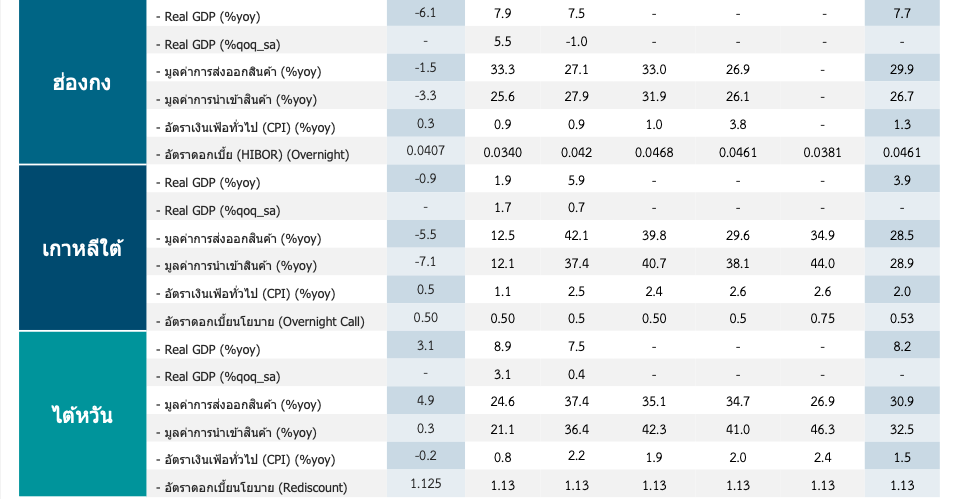
The inflation rate in August 2021 grew by 2.36% year-on-year, up from 1.92% in the previous month.
The value of exports in August 2021 grew by 26.9% year-on-year, slowing down from 34.7% in the previous month but better than market expectations of 23.5%, driven by increased sales in metal, plastic, rubber, and machinery products.
The value of imports in August 2021 grew by 46.3% year-on-year, accelerating from 41.0% in the previous month, driven by increased imports of minerals, metals, and machinery.
The trade balance recorded a surplus of 3.48 billion USD, down from a surplus of 5.9 billion USD in the previous month.
United Kingdom
The GDP for Q2 2021 grew by 22.2% year-on-year, or 4.8% compared to the previous quarter (after seasonal adjustment).
The value of exports in June 2021 grew at a slower rate of 6.0% year-on-year, down from 9.9% in the previous month.
The value of imports in June 2021 grew at a slower rate of 15.1% year-on-year, down from 27.3% in the previous month.
The trade balance in June 2021 recorded a deficit of -2.5 billion GBP. The industrial production in June 2021 increased by 8.3% year-on-year, down from 20.7% in the previous month.
Indicators of the Money Market and Exchange Rates
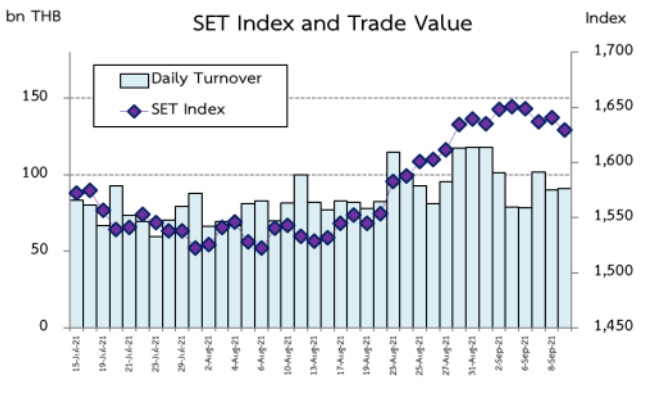
The SET index decreased slightly from the previous week, contrary to other regional stock markets, which increased from the previous week, such as Nikkei225 (Japan), HSI (Hong Kong), and CSI300 (Shanghai). On September 9, 2021, the index closed at 1,629.12 points, with an average trading value between September 6-9, 2021, of 90,309.26 million THB per day. Foreign investors and domestic retail investors were net buyers, while securities company accounts and domestic institutional investors were net sellers. During September 6-9, 2021, foreign investors net bought 3,284.61 million THB.
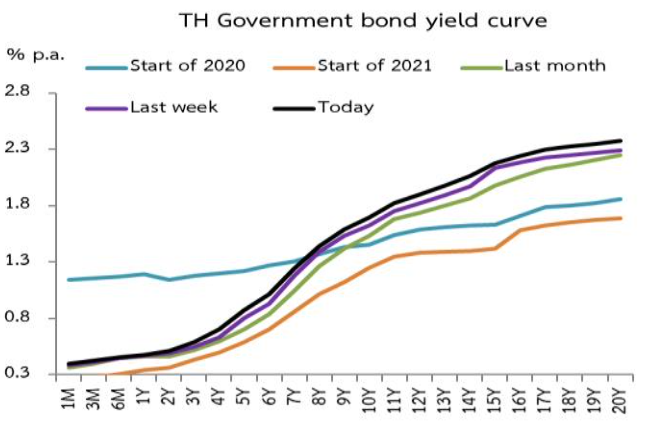
The overall yield on government bonds increased by 1 to 9 bps. This week, investors participated in the auction of 6-year government bonds, with demand at 1.60 times the auction amount. During September 6-9, 2021, foreign capital outflow from the bond market was -6,017.91 million THB, and since the beginning of the year until September 9, 2021, foreign capital inflow into the bond market was 115,358.88 million THB.
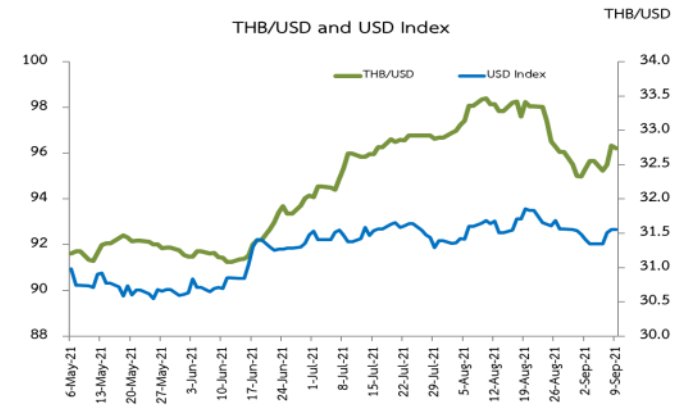
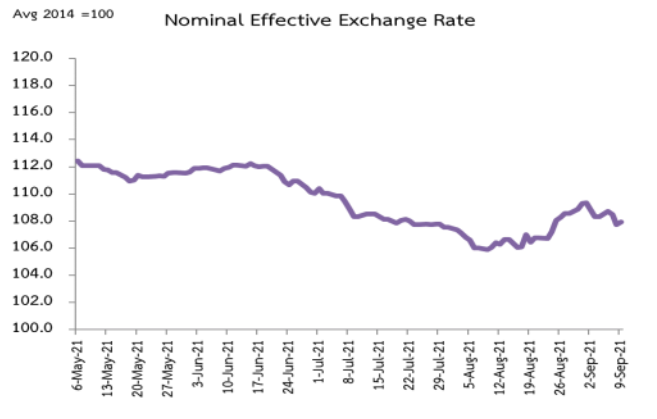
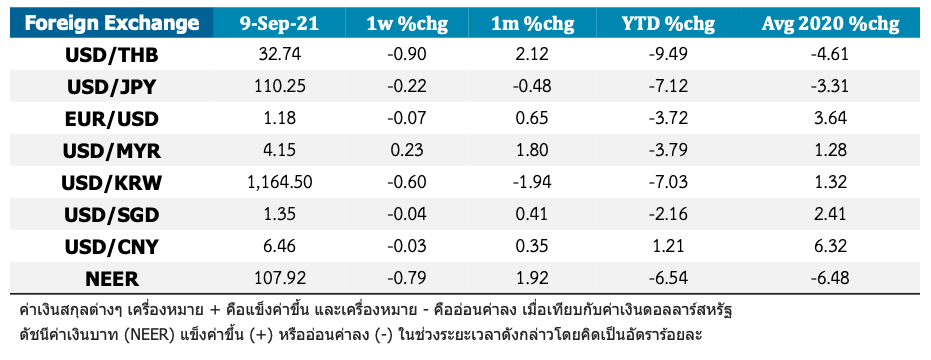
The Thai baht weakened against the previous week, closing at 32.74 THB per USD on September 9, 2021, down -0.90% from the previous week, in line with the depreciation of the yen, euro, won, Singapore dollar, and yuan against the USD, while the ringgit appreciated against the USD. The baht depreciated more than other major currencies in the region, resulting in the NEER index declining by -0.79% from the previous week.
Economic Indicators
Global Economic Indicators
Thank you for the information from the Macroeconomic Policy Bureau, Fiscal Policy Office, Ministry of Finance
02-273-9020 Ext. 3259